
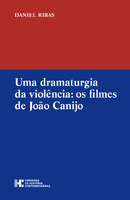
Uma dramaturgia da violência
os filmes de João Canijo
 Download
 Web Shop
Abstract
This book intends to examine the films of João Canijo and their ties to representations of national identity. For that purpose, we did a review of literature on Portuguese cultural identity in its diverse dimensions (historical, literary and anthropological), focusing on the importance of Salazar’s ideology and the current identity debates. In the second part of this thesis, we try to analyse eight feature films made by the director, proposing the idea of a dramaturgy of violence, through intertextuality with Greek tragedy and film melodrama, which gives a perspective of a representation of contemporary Portugal, based on a patriarchal society and its violence. We argue the importance of concepts such as non-inscription, by José Gil, or the repressed, by Eduardo Lourenço, to comprehend the films. At last, our analysis debates the issue of realism in cinema, through the prism of contemporary changes suggested by the work of the filmmaker, which fuses fictional and documentary elements. Finally, we suggest a type of dramaturgy of violence in João Canijo’s films that try to question the existing images of Portuguese identity and its cultural representations. Este livro pretende analisar a obra de João Canijo e a sua relação com as representações da identidade nacional. Para isso, socorre-se de uma revisão bibliográfica sobre a identidade cultural portuguesa, em diversas dimensões (histórica, literária e antropológica), ressaltando, sobretudo, a importância da ideologia salazarista e a tensão identitária da situação atual. Na segunda parte, o livro ensaia uma análise a oito longas-metragens do realizador, propondo a ideia de uma dramaturgia da violência, através de uma intertextualidade com a tragédia grega e o melodrama cinematográfico, que pretende dar conta de um imaginário português contemporâneo, que se baseia numa sociedade patriarcal e na sua violência. Nesse sentido, argumenta-se a importância de conceitos como a não-inscrição, de José Gil, ou o recalcado, de Eduardo Lourenço, para a compreensão dos filmes. Num último momento, esta análise percorre o debate do realismo no cinema, através do prisma das mudanças contemporâneas sugeridas pela obra do cineasta, em que se destaca uma hibridez entre elementos ficcionais e documentais. Sugere-se, finalmente, uma dramaturgia da violência nos filmes de João Canijo que procura rever o imaginário existente no que diz respeito à identidade portuguesa e às suas representações culturais.
Keywords
National identity; Portuguese Cinema; João Canijo; Violence; Salazarism; Tragedy; Realism; Melodrama; Portugal; Identidade Nacional; Cinema Português; Violência; Salazarismo; Tragédia; Realismo; MelodramaISBN
9789898956071; 9789898956088; 9789898956095OCN
1135845449Publisher
Imprensa de História ContemporâneaPublisher website
https://imprensa.ihc.fcsh.unl.pt/Publication date and place
2019Classification
Film history, theory or criticism
History and Archaeology
Later 20th century c 1950 to c 1999
Social and cultural history