
Logo Oapen
  • Join
    • Deposit
    • For Librarians
    • For Publishers
    • For Researchers
    • Funders
    • Resources
    • OAPEN
        View Item 
        •   OAPEN Home
        • View Item
        •   OAPEN Home
        • View Item
        JavaScript is disabled for your browser. Some features of this site may not work without it.

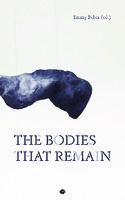
        The Bodies That Remain
        Thumbnail
        Download PDF Viewer
        Contributor(s)
        Beber, Emmy (editor)
        Collection
        ScholarLed
        Language
        English
        Show full item record
        Abstract
        The Bodies That Remain is a collection of bodies and absences. Through biography, experimental essay, interview, fictional manifestation, and poetic extraction, The Bodies That Remain is a collection of texts and images on the bodies of artists and writers who battled with the frustration of their own physicality and whose work reckoned with these limitations and continued beyond them. The essays in The Bodies That Remain look back at how the identities of these bodies were shaped by the spaces around them, through the retelling of memory, through stories told by others, of how their work, processed by their body, made it possible for others to experience sensations – mourning, desire, or a nostalgia that could not belong to another, to another’s body – and in capturing this ability, their work confirms the body’s urgency. Amongst others, The Bodies That Remain tells the story of Emily Dickinson’s decay, the missing grave of Valeska Gert, the voice and sound of the body of Judee Sill, and the derailed body (and work) of Jane Bowles. It questions the absent body but broken organs of JT Leroy as they find themselves scattered across texts, and also interrogates the loss of distinction of illness for Jules de Goncourt as syphilis riddled his nervous system. It retrieves the illusory body of Kathy Acker through dream and through horror, sees the morphing body of Michael Jackson in becoming all of the bodies he was asked to be, and looks toward Sylvia Plath and the language of her own body. Where ‘body’ as a verb makes material something abstract, The Bodies That Remain, as a collection, became bodily.
        URI
        http://library.oapen.org/handle/20.500.12657/25417
        Keywords
        embodiment; mourning; posthumous literature; mortality; metempsychosis
        DOI
        10.21983/P3.0212.1.00
        ISBN
        9781947447684, 9781947447677
        OCN
        1100491515
        Publisher
        punctum books
        Publisher website
        https://punctumbooks.com/
        Publication date and place
        Brooklyn, NY, 2018
        Classification
        Literary essays
        Pages
        306
        Rights
        https://creativecommons.org/licenses/by-nc-sa/4.0/
        • Imported or submitted locally

        Browse

        All of OAPENSubjectsPublishersLanguagesCollections

        My Account

        LoginRegister

        Export

        Repository metadata
        Logo Oapen
        • For Librarians
        • For Publishers
        • For Researchers
        • Funders
        • Resources
        • OAPEN

        Newsletter

        • Subscribe to our newsletter
        • view our news archive

        Follow us on

        License

        • If not noted otherwise all contents are available under Attribution 4.0 International (CC BY 4.0)

        Credits

        • logo EU
        • This project received funding from the European Union's Horizon 2020 research and innovation programme under grant agreement No 683680, 810640, 871069 and 964352.

        OAPEN is based in the Netherlands, with its registered office in the National Library in The Hague.

        Director: Niels Stern

        Address:
        OAPEN Foundation
        Prins Willem-Alexanderhof 5
        2595 BE The Hague
        Postal address:
        OAPEN Foundation
        P.O. Box 90407
        2509 LK The Hague

        Websites:
        OAPEN Home: www.oapen.org
        OAPEN Library: library.oapen.org
        DOAB: www.doabooks.org


        Export search results

        The export option will allow you to export the current search results of the entered query to a file. Differen formats are available for download. To export the items, click on the button corresponding with the preferred download format.

        A logged-in user can export up to 15000 items. If you're not logged in, you can export no more than 500 items.

        To select a subset of the search results, click "Selective Export" button and make a selection of the items you want to export. The amount of items that can be exported at once is similarly restricted as the full export.

        After making a selection, click one of the export format buttons. The amount of items that will be exported is indicated in the bubble next to export format.