
Logo Oapen
  • Join
    • Deposit
    • For Librarians
    • For Publishers
    • For Researchers
    • Funders
    • Resources
    • OAPEN
        View Item 
        •   OAPEN Home
        • View Item
        •   OAPEN Home
        • View Item
        JavaScript is disabled for your browser. Some features of this site may not work without it.

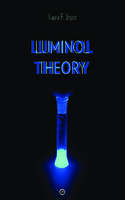
        Luminol Theory

        Thumbnail
        Download PDF Viewer
        Author(s)
        Joyce, Laura E.
        Collection
        ScholarLed
        Language
        English
        Show full item record
        Abstract
        Representations of forensic procedures saturate popular culture in both fiction and true crime. One of the most striking forensic tools used in these narratives is the chemical luminol, so named because it glows an eerie greenish-blue when it comes into contact with the tiniest drops of human blood. Luminol is a deeply ambivalent object: it is both a tool of the police, historically abused and misappropriated, and yet it offers hope to families of victims by allowing hidden crimes to surface. Forensic enquiry can exonerate those falsely accused of crimes, and yet the rise of forensic science is synonymous with the development of the deeply racist ‘science’ of eugenics. Luminol Theory investigates the possibility of using a tool of the state in subversive, or radical, ways. By introducing luminol as an agent of forensic inquiry, Luminol Theory approaches the exploratory stages that a crime scene investigation might take, exploring experimental literature as though these texts were ‘crime scenes’ in order to discover what this deeply strange object can tell us about crime, death, and history, to make visible violent crimes, and to offer a tangible encounter with death and finitude. At the luminol-drenched crime scene, flashes of illumination throw up words, sentences, and fragments that offer luminous, strange glimpses, bobbing up from below their polished surfaces. When luminol shines its light, it reveals, it is magical, it is prescient, and it has a nasty allure
        URI
        http://library.oapen.org/handle/20.500.12657/25451
        Keywords
        criminology; crime studies; forensic anthropology; horror; true crime
        DOI
        10.21983/P3.0177.1.00
        ISBN
        9781947447134, 9781947447127
        OCN
        1048180585
        Publisher
        punctum books
        Publisher website
        https://punctumbooks.com/
        Publication date and place
        Brooklyn, NY, 2017
        Classification
        Law
        Pages
        138
        Rights
        https://creativecommons.org/licenses/by-nc-sa/4.0/
        • Imported or submitted locally

        Browse

        All of OAPENSubjectsPublishersLanguagesCollections

        My Account

        LoginRegister

        Export

        Repository metadata
        Logo Oapen
        • For Librarians
        • For Publishers
        • For Researchers
        • Funders
        • Resources
        • OAPEN

        Newsletter

        • Subscribe to our newsletter
        • view our news archive

        Follow us on

        License

        • If not noted otherwise all contents are available under Attribution 4.0 International (CC BY 4.0)

        Credits

        • logo EU
        • This project received funding from the European Union's Horizon 2020 research and innovation programme under grant agreement No 683680, 810640, 871069 and 964352.

        OAPEN is based in the Netherlands, with its registered office in the National Library in The Hague.

        Director: Niels Stern

        Address:
        OAPEN Foundation
        Prins Willem-Alexanderhof 5
        2595 BE The Hague
        Postal address:
        OAPEN Foundation
        P.O. Box 90407
        2509 LK The Hague

        Websites:
        OAPEN Home: www.oapen.org
        OAPEN Library: library.oapen.org
        DOAB: www.doabooks.org


        Export search results

        The export option will allow you to export the current search results of the entered query to a file. Differen formats are available for download. To export the items, click on the button corresponding with the preferred download format.

        A logged-in user can export up to 15000 items. If you're not logged in, you can export no more than 500 items.

        To select a subset of the search results, click "Selective Export" button and make a selection of the items you want to export. The amount of items that can be exported at once is similarly restricted as the full export.

        After making a selection, click one of the export format buttons. The amount of items that will be exported is indicated in the bubble next to export format.