
Logo Oapen
  • Join
    • Deposit
    • For Librarians
    • For Publishers
    • For Researchers
    • Funders
    • Resources
    • OAPEN
        View Item 
        •   OAPEN Home
        • View Item
        •   OAPEN Home
        • View Item
        JavaScript is disabled for your browser. Some features of this site may not work without it.

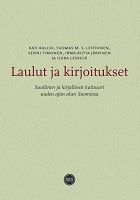
        Laulut ja kirjoitukset

        Suullinen ja kirjallinen kulttuuri uuden ajan alun Suomessa
        Thumbnail
        Download PDF Viewer
        Web Shop
        Author(s)
        Kallio, Kati
        Lehtonen, Tuomas M. S.
        Timonen, Senni
        Järvinen, Irma-Riitta
        Leskelä, Ilkka
        Language
        Finnish
        Show full item record
        Abstract
        Songs and writings: oral and literary cultures in early-modern Finland renews the understanding of exchange between the learned culture of clergymen and the culture of commoners, or “folk”. What happened when the Reformation changed the position of the oral vernacular language to literary and ecclesiastical, and when folk beliefs seem to have become an object for more intensive surveillance and correction? How did clergymen understand and use the versatile labels of popular belief, paganism, superstition and Catholic fermentation? Why did they choose particular song languages, poetic modes and melodies for their Lutheran hymns and literary poems, and why did they avoid oral poetics in certain contexts while accentuating it in others? How were the hagiographical traditions representing the international medieval literary or “great” tradition adapted to “small” folk traditions, and how did they persist and change after the Reformation? What happened to the cult of the Virgin Mary in local oral traditions? The first Finnish 16th-century reformers admired the new Germanic models of Lutheran congregational hymns and avoided the Finnic vernacular Kalevala-metre idiom, while their successors picked up many vernacular traits, most notably alliteration, in their ecclesiastical poetry and hymns. Over the following centuries, the new features introduced via new Lutheran hymns such as accentual metres, end-rhymes and strophic structures were infusing into oral folk poetry, although this took place also via secular oral and literary routes. On the other hand, seventeenth-century scholars cultivated a new academic interest in what they understood as “ancient Finnish poetry”. The book has an extensive English Summary for the international readership.
        URI
        http://library.oapen.org/handle/20.500.12657/31109
        Keywords
        middle ages; literary culture; folkloristics; literary research; folk poetry; oral culture
        DOI
        10.21435/skst.1427
        ISBN
        9789522229205;9789522229199
        OCN
        1030819368
        Publisher
        Finnish Literature Society / SKS
        Publication date and place
        Helsinki, Finland, 2017
        Grantor
        • Kirjastokonsortio Aleksandria and SKS
        Series
        Suomalaisen Kirjallisuuden Seuran Toimituksia, 1427
        Classification
        Northern Europe, Scandinavia
        16th century, c 1500 to c 1599
        Christianity
        History of religion
        Cultural studies
        Folklore studies / Study of myth (mythology)
        Sociology and anthropology
        Pages
        624
        Rights
        https://creativecommons.org/licenses/by-nc-nd/4.0/
        • Imported or submitted locally

        Browse

        All of OAPENSubjectsPublishersLanguagesCollections

        My Account

        LoginRegister

        Export

        Repository metadata
        Logo Oapen
        • For Librarians
        • For Publishers
        • For Researchers
        • Funders
        • Resources
        • OAPEN

        Newsletter

        • Subscribe to our newsletter
        • view our news archive

        Follow us on

        License

        • If not noted otherwise all contents are available under Attribution 4.0 International (CC BY 4.0)

        Credits

        • logo EU
        • This project received funding from the European Union's Horizon 2020 research and innovation programme under grant agreement No 683680, 810640, 871069 and 964352.

        OAPEN is based in the Netherlands, with its registered office in the National Library in The Hague.

        Director: Niels Stern

        Address:
        OAPEN Foundation
        Prins Willem-Alexanderhof 5
        2595 BE The Hague
        Postal address:
        OAPEN Foundation
        P.O. Box 90407
        2509 LK The Hague

        Websites:
        OAPEN Home: www.oapen.org
        OAPEN Library: library.oapen.org
        DOAB: www.doabooks.org


        Export search results

        The export option will allow you to export the current search results of the entered query to a file. Differen formats are available for download. To export the items, click on the button corresponding with the preferred download format.

        A logged-in user can export up to 15000 items. If you're not logged in, you can export no more than 500 items.

        To select a subset of the search results, click "Selective Export" button and make a selection of the items you want to export. The amount of items that can be exported at once is similarly restricted as the full export.

        After making a selection, click one of the export format buttons. The amount of items that will be exported is indicated in the bubble next to export format.