
An den Wurzeln der Tugend: Rheinischer Adel und Freimaurerei 1765–1815
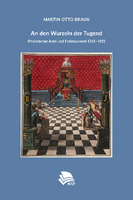
 Download
 Web Shop
Abstract
This study focuses on the relationship between nobility and freemasonry from 1750 to 1850. It examines the specific role of an esoteric discourse surrounding the roots of the human race, centring on legendary constructions of noble genealogies in eighteenth century Europe. The aristocratic idea of blood as a type of »liquid memory of virtue« was also found in the freemason lodges frequented by the European nobility of the eighteenth century. Both groups therefore believed in educational systems that used rites, pictures and symbols to imprint the virtues in ones blood and heart respectively. The foundation of this belief – strongly combined with an interest in occult sciences and the existence of an afterlife – can be seen in the antique »art of memory«. The example of an aristocratic lodge in Düsseldorf shows how these ›research interests‹ overlapped within masonic and non-masonic networks of European noblemen and citizens. In the perspective of Rhenish noblemen in the mid of the eighteenth century freemasonry took the role of an educational system that improved the qualities of the noble blood to secure the leading position of nobility in the God-given »Ständegesellschaft«. The aristocratic lodge La Parfaite Amitié therefore was not only dominated by Rhenish noblemen but also by cousinship. As a consequence, it struggled to become a »provincial lodge«, which had a stronger jurisdictional position in comparison with the civil-lodge of Düsseldorf.
The second example is the masonic network of Joseph zu Salm-Reifferscheidt-Dyck (1773– 1861), from the Napoleonic period. Born in the Ancient Regime to an aristocratic familiy of the lower Rhineland, Joseph zu Salm-Reifferscheidt-Dyck faced the extensive changes for the nobility of the Rhineland, caused by the French Revolution and the French occupation of the area. Together with his second wife, the Parisian Salonier Constance de Salm, he became a prominent person in the Napoleonic era. He not only acted as an influential scientist of systematic botany, as a politician and states-man but also as a high-ranking freemason in several rites, especially in the Rit écossais philosophique.
This masonic system can be seen as a ›scientific‹ one built upon the traditions of alchemistical and hermetical circles of the Ancient Regime. The Napoleonic period saw the occult sciences increasingly outdated and replaced by modern natural sciences. The methods considered as »exact« in the nineteenth century subsequently formed the perspective of civil dominated societies and its lodges on masonic rites and grades. In the masonic network of Joseph zu Salm-Reifferscheidt-Dyck, the Rit écossais philosophique was crossed with his network as a natural scientist, resulting in masonry being seen not only as an educational system but also as an exact way to uncover the »hidden roots« of the human soul and to assess the respective qualities of it. These tendencies were strongly influenced by the natural sciences outside the masonic sphere, which in parallel tried to uncover the »hidden roots« of the nations with the pseudo-scientific concepts of »race«.
The civil lodges of the Napoleonic era and afterwards, with their strong emphasis on the nation, could no longer be seen as a retreat for noble man and their exclusive ideology of
noble blood. The majority of the Rhenish nobility therefore turned away from the lodges in order to maintain a conservative view of itself in exclusively noble circles which still believed in the quality of the noble blood and its inherited race. Welche Rolle spielte das »Esoterische« für die Selbstsicht der adlig-bürgerlichen Eliten beim Übergang zur Moderne? Dieser Frage geht die Studie Martin Otto Brauns mit dem Titel »An den Wurzeln der Tugend. Rheinischer Adel und Freimaurerei 1765–1815« nach. Auf der Grundlage der mythischen Geschichtskonstruktionen von Genealogien des rheinischen Adels sowie des Geheimbunds der Freimaurerei zeichnet der Autor die parallel zu den Entwicklungen der Naturwissenschaften verlaufende Transformation der Vorstellung vom tugendhaften »Adel des Blutes« hin zum bürgerlichen »Adel des Intellekts« nach. Die Studie kann dabei zeigen, wie der esoterische Gehalt des frühneuzeitlichen Bildes von Wachstum und Fortschritt des Familienstammbaums sich um 1800 mehr und mehr auf die Konzepte »Nation« und »Volk« im Gesamten ausweitete. Das esoterische Denken hielt sich auf dieser Grundlage bis in die Moderne und sollte vorhandene rassische Vorstellungen adlig-bürgerlicher Eliten der »Sattelzeit« nachhaltig prägen. Martin Otto Braun promovierte im Fach Neuere und Mittelalterliche Geschichte an der Universität zu Köln und war Doktorand in der Forschergruppe »Aufbruch in die Moderne. Der Rheinische Adel in westeuropäischer Perspektive 1750–1850« des Deutschen Historischen Instituts Paris unter Leitung von Prof. Dr. Gudrun Gersmann. Er ist Autor und Mitherausgeber der durch die Fritz Thyssen Stiftung geförderten »Netzbiografie: Joseph zu Salm-Reifferscheidt-Dyck (1773–1861)«.
Er veröffentlicht Beiträge zu seiner Forschung in den Blogs »EsoHist. A blogged history of esotericism and secret societies« (Facebook: EsoHist), »Rheinischer Adel« und »Napoleon auf der Spur«.
Webseite: http://uni-koeln.academia.edu/MBraun
Keywords
rassenideologie; history; freemasonry; freimaurerei; geschichte 1760; esoterism; esoterik; nobility; adel; history 1760-1945; racial ideology; 1945; geschichte; ParisDOI
10.16994/baaISBN
9783958960015;9783958960022;9783958960039OCN
1030818358Publisher
Modern Academic PublishingPublisher website
https://www.humanities-map.net/Publication date and place
Cologne, 2016Classification
Biography and non-fiction prose
Biography: general
Biography: science, technology and medicine
History
European history
History and Archaeology
c 1500 onwards to present day
History: specific events and topics