
Logo Oapen
  • Join
    • Deposit
    • For Librarians
    • For Publishers
    • For Researchers
    • Funders
    • Resources
    • OAPEN
        View Item 
        •   OAPEN Home
        • View Item
        •   OAPEN Home
        • View Item
        JavaScript is disabled for your browser. Some features of this site may not work without it.

        Ardea: A Philosophical Novella
        Thumbnail
        Download PDF Viewer
        Author(s)
        Mathews, Freya
        Collection
        ScholarLed
        Language
        English
        Show full item record
        Abstract
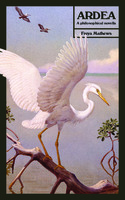
        What is soul? Can it be forfeited? Can it be traded away? If it can, what would ensue? What consequences would follow from loss of soul — for the individual, for society, for the earth? In the early nineteenth century, Goethe’s hero, Faust, became a defining archetype of modernity, a harbinger of the existential possibilities and moral complexities of the modern condition. But today the dire consequences of the Faustian pact with the devil are becoming alarmingly visible. In light of this, how would Goethe’s arguably flawed drama play out in a 21st-century century setting? Would a contemporary Faust sign up to a demonic deal? Indeed what, in the wake of two hundred years of social and economic development, would be left for the devil to offer him? A contemporary Faust would already possess everything the original Faust in his ascetic cloister lacked — affluence and mobility; celebrity and worldly influence; access to information; religious choice; sexual freedom and the availability of women — though women, it must be noted, currently also partake of that same freedom. The only thing a present-day Faust would lack would be his soul. Would he miss it? Does soul even exist? If it does, it would of course be the one thing the devil could not bestow. So from what or whom could Faust retrieve it? What, in a word, would a contemporary Faust most deeply desire? In pursuit of these questions, Ardea engages a familiar but possibly faulty archetype, that of Faust, with an unfamiliar one, that of the white heron, borrowed from a short story of the same name by nineteenth-century American author, Sarah Orne Jewett. In Jewett’s tale, a soul-pact of an entirely different kind from that entered into by Faust is proposed. It is a pact with the wild, a pledge of fealty, of non-forfeiture, that promises to redraw the violent psycho-sexual and psycho-spiritual patterns that have underpinned modernity. How would a present-day heir to the Faustian tradition, ingrained with the habit of entitlement but also burdened with the consequences of the old pact, respond to the new proposition?
        URI
        http://library.oapen.org/handle/20.500.12657/25478
        Keywords
        eco-philosophy; theory fiction; Faustian novella; wilderness; morality tale
        DOI
        10.21983/P3.0147.1.00
        ISBN
        9780615845562
        OCN
        1048182630
        Publisher
        punctum books
        Publisher website
        https://punctumbooks.com/
        Publication date and place
        Brooklyn, NY, 2016
        Classification
        Literary essays
        Pages
        104
        Rights
        https://creativecommons.org/licenses/by-nc-sa/4.0/
        • Imported or submitted locally

        Browse

        All of OAPENSubjectsPublishersLanguagesCollections

        My Account

        LoginRegister

        Export

        Repository metadata
        Logo Oapen
        • For Librarians
        • For Publishers
        • For Researchers
        • Funders
        • Resources
        • OAPEN

        Newsletter

        • Subscribe to our newsletter
        • view our news archive

        Follow us on

        License

        • If not noted otherwise all contents are available under Attribution 4.0 International (CC BY 4.0)

        Credits

        • logo EU
        • This project received funding from the European Union's Horizon 2020 research and innovation programme under grant agreement No 683680, 810640, 871069 and 964352.

        OAPEN is based in the Netherlands, with its registered office in the National Library in The Hague.

        Director: Niels Stern

        Address:
        OAPEN Foundation
        Prins Willem-Alexanderhof 5
        2595 BE The Hague
        Postal address:
        OAPEN Foundation
        P.O. Box 90407
        2509 LK The Hague

        Websites:
        OAPEN Home: www.oapen.org
        OAPEN Library: library.oapen.org
        DOAB: www.doabooks.org


        Export search results

        The export option will allow you to export the current search results of the entered query to a file. Differen formats are available for download. To export the items, click on the button corresponding with the preferred download format.

        A logged-in user can export up to 15000 items. If you're not logged in, you can export no more than 500 items.

        To select a subset of the search results, click "Selective Export" button and make a selection of the items you want to export. The amount of items that can be exported at once is similarly restricted as the full export.

        After making a selection, click one of the export format buttons. The amount of items that will be exported is indicated in the bubble next to export format.