
Logo Oapen
  • Join
    • Deposit
    • For Librarians
    • For Publishers
    • For Researchers
    • Funders
    • Resources
    • OAPEN
        View Item 
        •   OAPEN Home
        • View Item
        •   OAPEN Home
        • View Item
        JavaScript is disabled for your browser. Some features of this site may not work without it.

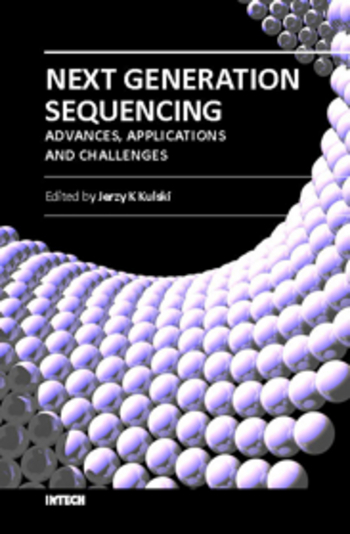
        Next Generation Sequencing - Advances, Applications and Challenges
        Thumbnail
        Contributor(s)
        Kulski, Jerzy K (editor)
        Language
        English
        Show full item record
        Abstract
        Next generation sequencing (NGS) has surpassed the traditional Sanger sequencing method to become the main choice for large-scale, genome-wide sequencing studies with ultra-high-throughput production and a huge reduction in costs. The NGS technologies have had enormous impact on the studies of structural and functional genomics in all the life sciences. In this book, Next Generation Sequencing Advances, Applications and Challenges, the sixteen chapters written by experts cover various aspects of NGS including genomics, transcriptomics and methylomics, the sequencing platforms, and the bioinformatics challenges in processing and analysing huge amounts of sequencing data. Following an overview of the evolution of NGS in the brave new world of omics, the book examines the advances and challenges of NGS applications in basic and applied research on microorganisms, agricultural plants and humans. This book is of value to all who are interested in DNA sequencing and bioinformatics across all fields of the life sciences.
        URI
        http://library.oapen.org/handle/20.500.12657/31544
        Keywords
        molecular biology; biochemistry; genetics
        DOI
        10.5772/60489
        ISBN
        9789535122401
        OCN
        1030819120
        Publisher
        InTechOpen
        Publisher website
        https://www.intechopen.com/
        Publication date and place
        2016
        Classification
        Biochemistry
        Chapters in this book
        • Chapter 5 Computational Analysis and Integration of MeDIP-seq Methylome Data
        Rights
        • Imported or submitted locally

        Browse

        All of OAPENSubjectsPublishersLanguagesCollections

        My Account

        LoginRegister

        Export

        Repository metadata
        Logo Oapen
        • For Librarians
        • For Publishers
        • For Researchers
        • Funders
        • Resources
        • OAPEN

        Newsletter

        • Subscribe to our newsletter
        • view our news archive

        Follow us on

        License

        • If not noted otherwise all contents are available under Attribution 4.0 International (CC BY 4.0)

        Credits

        • logo EU
        • This project received funding from the European Union's Horizon 2020 research and innovation programme under grant agreement No 683680, 810640, 871069 and 964352.

        OAPEN is based in the Netherlands, with its registered office in the National Library in The Hague.

        Director: Niels Stern

        Address:
        OAPEN Foundation
        Prins Willem-Alexanderhof 5
        2595 BE The Hague
        Postal address:
        OAPEN Foundation
        P.O. Box 90407
        2509 LK The Hague

        Websites:
        OAPEN Home: www.oapen.org
        OAPEN Library: library.oapen.org
        DOAB: www.doabooks.org


        Export search results

        The export option will allow you to export the current search results of the entered query to a file. Differen formats are available for download. To export the items, click on the button corresponding with the preferred download format.

        A logged-in user can export up to 15000 items. If you're not logged in, you can export no more than 500 items.

        To select a subset of the search results, click "Selective Export" button and make a selection of the items you want to export. The amount of items that can be exported at once is similarly restricted as the full export.

        After making a selection, click one of the export format buttons. The amount of items that will be exported is indicated in the bubble next to export format.