
Logo Oapen
  • Join
    • Deposit
    • For Librarians
    • For Publishers
    • For Researchers
    • Funders
    • Resources
    • OAPEN
        View Item 
        •   OAPEN Home
        • View Item
        •   OAPEN Home
        • View Item
        JavaScript is disabled for your browser. Some features of this site may not work without it.

        Transformation through destruction

        A monumental and extraordinary Early Iron Age Hallstatt C barrow from the ritual landscape of Oss-Zevenbergen
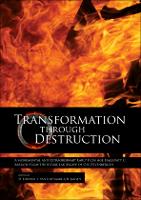
        Thumbnail
        Download PDF Viewer
        Contributor(s)
        Fontijn, David (editor)
        van der Vaart-Verschoof, Sasja (editor)
        Jansen, Richard (editor)
        Collection
        Dutch Research Council (NWO)
        Language
        English
        Show full item record
        Abstract
        Some 2800 years ago, a man died in what is now the municipality of Oss, the Netherlands. His death must have been a significant event in the life of local communities, for he received an extraordinary funeral, which ended with the construction of an impressive barrow. Based on the meticulous excavation and a range of specialist and comprehensive studies of finds, a prehistoric burial ritual now can be brought to life in surprising detail. An Iron Age community used extraordinary objects that find their closest counterpart in the elite graves of the Hallstatt culture in Central Europe. This book will discuss how lavishly decorated items were dismantled and taken apart to be connected with the body of the deceased, all to be destroyed by fire. In what appears to be a meaningful pars pro toto ritual, the remains of his body, the pyre, and the objects were searched through and moved about, with various elements being manipulated, intentionally broken, and interred or removed. In essence, a person and a place were transformed through destruction. The book shows how the mourners carefully, almost lovingly covered the funeral remains with a barrow. Attention is also given to another remarkable monument, long mound 6, located immediately adjacent to mound 7. Excavations show how mound 7 was part of an age-old ritual heath landscape that was entirely restructured during the Early Iron Age, when it became the setting for the building of no less than three huge Hallstatt C barrows. Thousands of years later, during the Late Middle Ages, this landscape underwent a complete transformation of meaning when the prehistoric barrows became the scenery for a macabre display of the cadavers of executed criminals.
        URI
        http://library.oapen.org/handle/20.500.12657/39594
        Keywords
        archaeology; prehistory; iron age; Hallstatt; barrow; excavation; excavation techniques; burial ritual
        Publisher
        Sidestone Press
        Publisher website
        https://www.sidestone.com/
        Publication date and place
        2013
        Grantor
        • Nederlandse Organisatie voor Wetenschappelijk Onderzoek
        Classification
        Archaeology
        Pages
        348
        Public remark
        This publication is part of the Ancestral Mounds Research Project of the University of Leiden; This publication is part of the Ancestral Mounds Research Project of the University of Leiden; 21-7-2020 - No DOI registered in CrossRef for ISBN 9789088901027
        Rights
        https://creativecommons.org/licenses/by-nc-nd/4.0/
        • Imported or submitted locally

        Browse

        All of OAPENSubjectsPublishersLanguagesCollections

        My Account

        LoginRegister

        Export

        Repository metadata
        Logo Oapen
        • For Librarians
        • For Publishers
        • For Researchers
        • Funders
        • Resources
        • OAPEN

        Newsletter

        • Subscribe to our newsletter
        • view our news archive

        Follow us on

        License

        • If not noted otherwise all contents are available under Attribution 4.0 International (CC BY 4.0)

        Credits

        • logo EU
        • This project received funding from the European Union's Horizon 2020 research and innovation programme under grant agreement No 683680, 810640, 871069 and 964352.

        OAPEN is based in the Netherlands, with its registered office in the National Library in The Hague.

        Director: Niels Stern

        Address:
        OAPEN Foundation
        Prins Willem-Alexanderhof 5
        2595 BE The Hague
        Postal address:
        OAPEN Foundation
        P.O. Box 90407
        2509 LK The Hague

        Websites:
        OAPEN Home: www.oapen.org
        OAPEN Library: library.oapen.org
        DOAB: www.doabooks.org


        Export search results

        The export option will allow you to export the current search results of the entered query to a file. Differen formats are available for download. To export the items, click on the button corresponding with the preferred download format.

        A logged-in user can export up to 15000 items. If you're not logged in, you can export no more than 500 items.

        To select a subset of the search results, click "Selective Export" button and make a selection of the items you want to export. The amount of items that can be exported at once is similarly restricted as the full export.

        After making a selection, click one of the export format buttons. The amount of items that will be exported is indicated in the bubble next to export format.