OAPEN Library: Recent submissions
Now showing items 27221-27240 of 49309
-
(2021)Through the parchments of the aristocratic archive, the essay reconstructs the events and paths of construction and consolidation of the political and social role of the Albertini of Cimitile, an important family of the ...
-
(2022)In the face of rising authoritarianism and on the heels of urgent struggle, autonomy calls to us. How might we excavate the theory and history of autonomous politics to arrive at new possibilities for radical democracy and ...
-
(2021)The essay provides an overview on fiefs and seigneurial powers in the Kingdom of Naples in the Aragonese era, on the base of findings and research issues drawn on the serie Relevi kept at the Archivio di Stato of Naples. ...
-
(2021)The aim of this paper is to reassess the history of the Sanseverino family, princes of Bisignano in Calabria in the Late Middle Ages; by focusing on a specific and unpublished source: the so-called “reintegre or platee” ...
-
(2021)In recent years, historiographical reflection has devoted more and more attention to the rela- tionship between the exercise of power and the processes of production/management of doc- uments, understood as real instruments ...
-
(2021)The paper introduces the volume, focuses the purposes of the research, summarizes the essays and their historiographical framework. If you study the archives of Southern Italy’s feudal lords, you are studying the nature ...
-
(2021)The essay offers an analysis of the largest concentration of records concerning the feudal lord- ship in the Kingdom of Naples from the 15th to the 17th century, the serie Relevi, kept at the Ar- chivio di Stato of Naples. ...
-
(2021)In this paper we present the results obtained from the systematic investigation of the sub-series ‘Conti erariali dei feudi’ of the fund ‘Dipendenze della Sommaria’ preserved in the State Ar- chives of Naples. A reasoned ...
-
(2021)Charles I of Anjou restored the counties according to the Norman system; his successors im- proved them and let them become a space of local power inside the the Royal districts, the gi- ustizierati. At the same time some ...
-
(2021)Introduces some key notions of cognitive (neuro)science including mirror neurons and perceptual and motor schemas. Much important processing may be subconscious. Af-fordances link multi-modal perception and action. Three ...
-
(2021)Explores the role of mood and meaning in architectural experience via the German no-tion of stimmung, relating to the central questions of temperance and harmony in music and architecture. Motor resonance and attunement ...
-
(2021)This chapter, written by a cognitive neuroscientist and an architect, endeavors to suggest why and how cognitive neuroscience should investigate our relationship with aesthetics and architecture—framing this empirical ...
-
(2021)Discusses the role that attention plays in constituting the world, rather than reducing phenomena to the brain level. Discusses the different kinds of attention delineated by the divided hemispheres of the brain. On the ...
-
(2021)Discusses the Indian design treatise the Vaastu Veda in relation to visual neuroscience. Relates visual perception in architecture to functional organisation of the brain. Relates Hubel and Weisel’s orientation sensitivity ...
-
-
(2021)Reflects on the nature of human meaning making through architecture. Meaning mak-ing is understood to be situated, relational, qualitative, dynamic and enacted. To appre-ciate the significance of architecture we need to ...
-
(2021)Argues that architect’s have a moral imperative to transform and support living conditions and recommends a hippocratic oath for architects to recognise their responsibility to support human wellbeing. A value change needs ...
-
(2021)In our culture, dominated by shallow rationality and reliance on the empirical, measur-able and demonstrable, the embodied, experiential and mental dimensions of design are supressed. Yet, there is an interest in the ...
-
(2021)We are bodies start from other bodies. Yet, we rarely consider how our bodies extend into our surroundings. Discusses our body schema, peripersonal and extra personal space. Considers buildings as extensions of our bodies ...
-
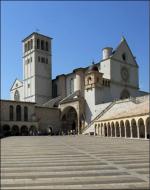
(2021)The founder of the Academy of Neuroscience for Architecture relates the story of its in-spiration in Jonas Salk’s insistence that his experience at the Abbey at Assissi helped him develop the vaccine for polio. He discusses ...