
Logo Oapen
  • Join
    • Deposit
    • For Librarians
    • For Publishers
    • For Researchers
    • Funders
    • Resources
    • OAPEN
        View Item 
        •   OAPEN Home
        • View Item
        •   OAPEN Home
        • View Item
        JavaScript is disabled for your browser. Some features of this site may not work without it.

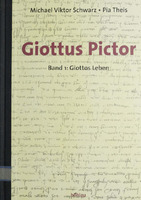
        Giottus Pictor

        Band 1: Giottos Leben
        Thumbnail
        Download PDF Viewer
        Author(s)
        Schwarz, Michael Viktor
        Theis, Pia
        Collection
        Austrian Science Fund (FWF)
        Language
        German
        Show full item record
        Abstract
        Giotto is considered to be the artist who framed the transition from the art of the middle ages to that of the modern era. From the perspective of cultural history, one may say: He was among those who shaped the language of early modern visual media. As a consequence, in historic memory he became a mythical figure. This figure assumed its accepted form in the mid 16th Century (Vasari). The goal of the book is to reveal as much historical reality as possible behind the myth. For this purpose a campaign was carried out in the Florentine State's Archive which brought to light ca. 100 hitherto unknown primary documents concerning the painter's life, family, and business. They are presented and discussed along with the ca. 50 primary documents which were already known. Besides that all texts from the 14th to the 16th Century are presented which contributed to Vasari's Giotto-figure. On the one hand, essential parts of Giotto's biography are reconstructed in this material. On the other hand, it explains the discourse which led to the Renaissance Image of Giotto. The book is the first volume of a monograph which will have three volumes. The second will be dedicated to Giotto's works, and the third to his afterlife. These parts will also deal with the material presented in the first volume, and it will be discussed under new perspectives.
         
        Giotto gilt als die Künstlerfigur, die den Übergang der Kunst vom Mittelalter in die Neuzeit gestaltete. Aus einem kulturgeschichtlichen Blickwinkel kann man auch sagen: Er war unter denjenigen, welche die Sprache der frühneuzeitlichen visuellen Medien geprägt haben. Entsprechend wurde er in der historischen Erinnerung zu einer mythischen Gestalt. Sie erfuhr ihre bis heute weitgehend gültige Prägung im mittleren 16. Jahrhundert (Vasari). Das Ziel des Buches ist es, möglichst viel historische Realität hinter dem Mythos freizulegen. Eine zu diesem Zweck veranstaltete Kampagne im Florentiner Staatsarchiv förderte ca. 100 bisher unbekannte Primärquellen zum Leben, zur Familie und zu den Geschäftsverbindungen des Malers zutage. Sie werden neben den ca. 50 bereits bekannten vollständig präsentiert und besprochen. Daneben werden auch alle Texte aus dem 14. bis 16. Jahrhundert vorgelegt, welche zur Giotto-Figur Vasaris beitrugen. Mit diesem Material wird einerseits eine wenn auch bruchstückhafte Rekonstruktion der Biographie des historischen Giotto erreicht, andererseits eine weitgehend vollständige Geschichte jenes Diskurses geschrieben, an dessen Ende das Giotto-Bild steht, das die Renaissance an die Gegenwart weiterreichte. Das Buch ist der erste Band einer auf drei Bände angelegten Giotto-Monographie. Der zweite Band wird Giottos Werke behandeln, der dritte Band Giottos Nachleben. Diese Teile werden auch auf das im vorliegenden Band präsentierte Material zurückgreifen und es unter anderen Aspekten weiter diskutieren.
         
        URI
        http://library.oapen.org/handle/20.500.12657/29413
        Keywords
        Giotto; Künstlermythos; Biographie; Dante Alighieri; Florenz
        DOI
        10.7767/9783205114758
        ISBN
        9783205114758
        OCN
        1076717340
        Publication date and place
        2004
        Grantor
        • Austrian Science Fund - D 3622
        Imprint
        Böhlau
        Pages
        412
        Public remark
        Relevant Wikipedia pages: Dante Alighieri - https://de.wikipedia.org/wiki/Dante_Alighieri; Florenz - https://de.wikipedia.org/wiki/Florenz; Giotto di Bondone - https://de.wikipedia.org/wiki/Giotto_di_Bondone
        • Imported or submitted locally

        Browse

        All of OAPENSubjectsPublishersLanguagesCollections

        My Account

        LoginRegister

        Export

        Repository metadata
        Logo Oapen
        • For Librarians
        • For Publishers
        • For Researchers
        • Funders
        • Resources
        • OAPEN

        Newsletter

        • Subscribe to our newsletter
        • view our news archive

        Follow us on

        License

        • If not noted otherwise all contents are available under Attribution 4.0 International (CC BY 4.0)

        Credits

        • logo EU
        • This project received funding from the European Union's Horizon 2020 research and innovation programme under grant agreement No 683680, 810640, 871069 and 964352.

        OAPEN is based in the Netherlands, with its registered office in the National Library in The Hague.

        Director: Niels Stern

        Address:
        OAPEN Foundation
        Prins Willem-Alexanderhof 5
        2595 BE The Hague
        Postal address:
        OAPEN Foundation
        P.O. Box 90407
        2509 LK The Hague

        Websites:
        OAPEN Home: www.oapen.org
        OAPEN Library: library.oapen.org
        DOAB: www.doabooks.org


        Export search results

        The export option will allow you to export the current search results of the entered query to a file. Differen formats are available for download. To export the items, click on the button corresponding with the preferred download format.

        A logged-in user can export up to 15000 items. If you're not logged in, you can export no more than 500 items.

        To select a subset of the search results, click "Selective Export" button and make a selection of the items you want to export. The amount of items that can be exported at once is similarly restricted as the full export.

        After making a selection, click one of the export format buttons. The amount of items that will be exported is indicated in the bubble next to export format.