
Geschichte der venezianischen Malerei, Band 1
Band 1: Von den Mosaiken in San Marco bis zum 15. Jahrhundert
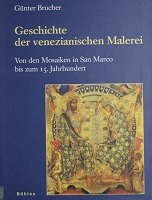
 Download
Abstract
The present manuscript is meant as volume I of a series of books comprising four volumes in total. Except for Hüttinger´s barely sufficient survey, its object, an overall presentation of Venetian painting from the early beginnings till the 18th and 19th centuries, has almost been neglected by German scholars up to this day. The same may be said about Italian investigations, the more so as the book-series Pittura nell Veneto (edited in several volumes) strongly resembles a corpus opus: It does comprise the most important facts (e.g.the biographies of the artists) and provides a fine collection of pictures as well as a presentation of the momentary status of research, making every effort to completeness, but purely artistic, developmental, iconographic, style-genetic and coloring problems are examined in a rather rudimentary manner and, moreover, organised in a way which cannot easily be followed by the reader.
When overlooking the numerous single publications by Italian authors, one will realize that they share an almost incomprehensible timidity of analysing the paintings thoroughly. Such an attempt, however, must be considered the only proper way to get to the root of both development and peculiarity of Venetian painting, so well characterized by Hetzer´s term "ornamental".
Comparative work interpretations will have to meet this scientific deficiency. Proceeding from a descriptive technique based on the specific structure and thus
taking form as well as colour into consideration, the theories of morphology and perceptive psychology largely contribute to this intention. Only on the ground of visual findings which have been proven analytically, questions of how to date properly, of how to decide possible work participation and/or dependence of the artists can be clarified, with the additional goal of reaching hermeneutic results and working out what is considered typically Venetian.- Volume I starts out with a survey of Venetian history till the middle of the 15th century, leading from the mosaics of San Marco (beginning with the 11th century) to the second half of the quattrocento. Contrary to usual scholarly views, the art of mosaics is classed with the art of painting, for it incorporates the very same criteria of painting as to form, style and arrangement. The main point here is to bring O.Demus´s scientific results with reference to chronology, genesis of style etc. in accordance with those of Italian scientists who quite frequently hold different views, and to come up with personal decisions at times. Prevailing in the mosaics of San Marco, Byzantinism conditions Venetian painting (fresco and table painting, which gets into being at the end of the 13th century) and remains dominant till late into the trecento. Here it is first observed with Paolo Veneziano, who seldom glances at the development of the occidental style on Terraferma (e.g. Giotto). The ensuing breakthrough of the Gothic style is found with Lorenzo Veneziano. In its course, Byzantine, Upper-Italian and transalpine stimulations fuse into a remarkable symbiosis. Hence investigations in the field of coloring, which have rarely been dealt with in specialized literature, play and hitherto will play a decisive rôle in the evaluation of Venetian painting. A special chapter is dedicated to N. Semitecolo who stands under Padua´s influence (cf. Guariento). After recurrences to conservative Byzantine elements in the last third of the trecento, the international Gothic style celebrates its entry into Venetian painting (cf Jacobello de Fiore) under the strong influence of Gentile da Fabriano. At the same time, first signs of a more modern attitude to painting can be observed with Giambono. Far longer than in the rest of Italy, painting in Venice was partial to the tendencies of the international Gothic as well as to elements of splendour, decoration and space. This explains why first indications of the early renaissance appear rather late, mainly in the works of G. d´Al Das vorliegende Manuskript ist als erster Band einer auf insgesamt vier Bände projektierten Buchreihe gedacht. Beabsichtigt ist letztlich eine Gesamtdarstellung der venezianischen Malerei von den Anfängen bis ins 18./19. Jahrhundert, ein Vorhaben, dem sich die deutschsprachige Forschung - abgesehen von Hüttingers äußerst knapper Überblickspublikation - bis heute entzogen hat. Auch seitens der italienischen Forschung liegt m.E. nichts Adäquates vor, zumal die mehrbändige Buchreihe "Pittura nel Veneto" eher dem Wesen eines Corpuswerks entspricht, das zwar die wichtigsten Fakten (Künstlerbiographien usw.), ein vorzügliches Fotomaterial und eine auf Vollständigkeit Bedacht nehmende Darstellung des Forschungsstands enthält, auf reinkünstlerische, koloristische, entwicklungsgeschichtliche, ikonographische und stilgenetische Probleme aber nur sehr rudimentär und in einer für den Leser nur schwer nachvollziehbaren Organisationsweise Bezug nimmt. Überblickt man die zahllosen Einzelpublikationen italienischer Provenienz, so ist all diesen eines gemeinsam: eine geradezu unverständliche Scheu vor genauen Werkanalysen, anhand derer es allein möglich ist, dem Entwicklungsweg und Wesen der venezianischen Malerei, das Hetzer so treffend mit dem Begriff des "Ornamentalen" umschrieben hat, auf den Grund zu gehen. Diesem kunstwissenschaftlichen Defizit soll mittels komparatistischer Werkanalysen Abhilfe geleistet werden. Ausgehend von einer strukturspezifischen Beschreibungstechnik, die Form und Farbe gleichermaßen berücksichtig, leistet hier die Gestalttheorie bzw. Wahrnehmungspsychologie einen effizienten Beitrag. Erst auf dieser Basis eines analytisch abgesicherten visuellen Befunds klären sich u.a. Datierungsfragen, Probleme eventueller Werkstattbeteiligung sowie künstlerische Abhängigkeiten, mit dem Ziel, auch zu hermeneutischen Ergebnissen zu gelangen und das typisch Venezianische herauszuarbeiten. - Der erste Band beginnt mit einer Überblicksdarstellung der Geschichte Venedigs (bis zur Mitte des 15. Jahrhunderts) und führt von den Mosaiken in San Marco (ab dem 11. Jahrhunderts) bis in die zweite Hälfte des Quattrocento. Entgegen den üblichen Usancen wird die Mosaikkunst zur Gattung der Malerei gezählt, zumal für jene die gleichen Form-, Stil- und Gestaltungskriterien gelten. Hier geht es vor allem darum, die wissenschaftlichen Ergebnisse von O. Demus - bezüglich Stilgenese, Chronologie usw. - mit den nicht selten davon abweichenden Erkenntnissen der italienischen Forschung abzustimmen, um bisweilen eigenständige Entscheidungen zu fällen. Der in den Mosaiken von San Marco vorherrschende Byzantinismus bildet die Voraussetzung für die am Ende des 13. Jahrhunderts anhebende Malerei Venedigs (Fresko und Tafelmalerei) und bleibt letztlich bis weit in das Trecento bestimmend, zunächst vor allem bei Paolo Veneziano, der seinen Blick nur selten auf die abendländische Stilentwicklung der Terra ferma (z.B. Giotto) richtet. Mit Lorenzo Veneziano erfolgt der sukzessive Durchbruch zur Gotik, wobei byzantinische, oberitalienische und transalpine (Böhmen) Anregungen zu einer bemerkenswerten Symbiose gelangen. Koloritforschungen, wie sie in der Fachliteratur kaum anzutreffen sind, spielen hier und fortan eine entscheidende Rolle. Dem im Bannkreis Paduas (Guariento) angesiedelten N. Semitecolo ist ein eigenes Kapitel gewidmet. Nach konservativ-byzantinischen Rückgriffen im letzten Drittel des Trecento gelangt die internationale Gotik mit ihrem Hauptvertreter, Jacobello del Fiore, in Venedig zum Durchbruch (maßgeblich dafür der Einfluss etwa von Gentile da Fabriano); zugleich machen sich mit Giambono erste Anzeichen einer neuzeitlichen Malerei bemerkbar. Länger als andernorts in Italien hat man in der venezianischen Malerei an den Tendenzen des internationalen Stils festgehalten. Desgleichen an der Vorliebe für das Prächtige, Dekorative und die flächenspezifische Bildprojektion. Demgemäß treten Anzeichen von Frührenaissance erst relativ spät in Erscheinung,