
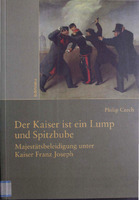
Der Kaiser ist ein Lump und Spitzbube
Majestätsbeleidigung unter Kaiser Franz Joseph
 Download
Abstract
The subject of this study is the criminal prosecution of insulting remarks about the emperor in the Habsburg monarchy in the second half of the 19th century (1852-1918). The first chapter discusses the historical development of the protection of state and sovereign through penal law that resulted in the penal code of 1852. Then the norms on the protection of state and dynasty in this penal code and the settings of the criminal proceedings code are discussed. As lese majesty was a politically disputed matter, also the discussion on the planed reform of the penal code is given the necessary attention.The main part of the book examines which insulting remarks on Francis Joseph were in fact prosecuted by the Regional Court Salzburg. Special attention is paid to the question what motivated the defendants to insult the emperor and what conclusions can be drawn from their remarks regarding the relation between authority and subjects. In this context is also analyzed how the authorities got to know about the insulting remarks, which sentences where imposed by the Regional Court and from which factors the sentences where influenced. Also the social composition of the offenders is analyzed. On the basis of criminal statistics the study investigates, which social and political factors influenced the numbers of convictions for lese majesty. It can be demonstrated, how political and economic developments influenced public opinion and how on the other side the provision on lese majesty could be exploited to suppress political opposition. The last chapter is dedicated to the suppression of critical comments on the emperor and the dynasty in newspapers and other products of the press. Based on a description of the legal framework, the study analyzes how censorship was operated by the authorities in the crown-land Salzburg. The book shows which comments in newspapers lead to confiscations and which political developments or events within the royal family gave rise to critical comments. Die vorliegende Arbeit widmet sich der strafrechtlichen Verfolgung von beleidigenden Äußerungen über den Monarchen in der Habsburgermonarchie der zweiten Hälfte des 19. Jahrhunderts (1852-1918). Dazu wird zunächst die historische Entwicklung des strafrechtlichen Schutzes von Staat und Herrscher dargestellt, die schließlich im Strafgesetz von 1852 ihren Abschluss fand. Sodann werden die einschlägigen Bestimmungen des Strafgesetzes von 1852 und die prozessrechtlichen Rahmenbedingungen dargestellt. Da der Tatbestand der Majestätsbeleidigung politisch umstritten war, erfährt auch die Anfang der 1860er-Jahre einsetzende Reformdiskussion die ihr gebührende Behandlung. Aufbauend auf dieser Darstellung der rechtlichen Rahmenbedingungen wird im Hauptteil der Arbeit untersucht, welche Schmähungen Kaiser Franz Josephs in der Praxis des Salzburger Landesgerichts in welcher Weise geahndet wurden. Dabei wird insbesondere untersucht, wodurch die Täter zu den inkriminierten Äußerungen motiviert wurden und welche Rückschlüsse ihre Meinungsäußerungen auf das Verhältnis zwischen Obrigkeit und Untertanen zulassen. Zudem wird analysiert, wie die Obrigkeit Kenntnis von den inkriminierten Äußerungen erlangte und welche Strafen das Salzburger Landesgericht verhängte und von welchen Faktoren die Strafbemessung beeinflusst wurde. Im Anschluss daran wird die soziale Zusammensetzung der Verurteilten untersucht. Anhand der Kriminalstatistiken wird weiters der Frage nachgegangen, welche gesellschaftlichen und politischen Entwicklungen Einfluss auf die Häufigkeit der Verurteilungen wegen Majestätsbeleidigung hatten. Dabei wird gezeigt, inwieweit sich einerseits politische und wirtschaftliche Entwicklungen auf die Stimmung in der Bevölkerung auswirkten, und wie andererseits der Majestätsbeleidigungsparagraph für die Unterdrückung unliebsamer politischer Strömungen instrumentalisiert wurde. Ein eigenes Kapitel ist schließlich der Unterdrückung von Kritik an Kaiser und Dynastie in der Presse gewidmet. Aufbauend auf eine Darlegung der presserechtlichen Rahmenbedingungen wird erörtert, wie die Zensur in der Praxis der Salzburger Behörden gehandhabt wurde, welche Artikel Anlass zu Konfiskationen gaben und welche politischen Entwicklungen und Ereignisse in der kaiserlichen Familie Anlass zu kritischen Berichten und Kommentaren gaben.
Keywords
History; Austria; Lese majesty; Historical criminology; History of Law; Francis Joseph; Beleidigung (Deutschland); Gericht; Habsburg; Monarchie; Salzburg; TatbestandDOI
10.26530/oapen_437156Publisher
BrillPublisher website
https://brill.com/Publication date and place
2010Grantor
Imprint
BöhlauClassification
History