
Logo Oapen
  • Join
    • Deposit
    • For Librarians
    • For Publishers
    • For Researchers
    • Funders
    • Resources
    • OAPEN
        View Item 
        •   OAPEN Home
        • View Item
        •   OAPEN Home
        • View Item
        JavaScript is disabled for your browser. Some features of this site may not work without it.

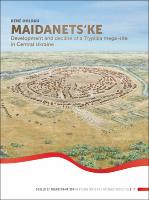
        Maidanets'ke. Development and decline of a Trypillia mega-site in Central Ukraine
        Thumbnail
        Download PDF Viewer
        Web Shop
        Author(s)
        Ohlrau, René
        Language
        English
        Show full item record
        Abstract
        At the end of the 5th millennium BCE, some of the vastest settlements of the time emerged on the forest steppe north of the Black Sea. The largest of these sites were found between the Southern Bug and Dnieper river. There they occur only tens of kilometres apart and are assumed to be partly coeval. The Trypillia ‘mega-sites’ reached sizes of up to 320 hectares with up to 3000 buildings in one place. During their peak times as many as 11,000 people could have lived in one of those settlements. But how did people come together in these Trypillia ‘mega-sites’ with several thousand dwellings? How long were such sites inhabited, and how many people lived there? Were these settlements the first towns, preceding the Mesopotamian development? To address these questions, this book presents the results of the investigations at the Maidanets'ke ‘mega-site’. To date, Maidanets'ke represents the most complex of these enormous sites and is also among the best investigated ones. Based on new excavations by international teams, the settlement’s history, its structure and regional context are addressed. The excavation results, with features like a pottery production site, a causewayed enclosure and several dwellings, are presented in detail. An extensive radiocarbon dating program conducted on various parts of the site, in combination with pottery studies, revealed several phases of continuous occupation between 3990-3640 cal BCE. According to the number of contemporary structures, the demography of a ‘mega-site’ is reconstructed in detail for the first time. Targeted geophysical surveys in the core area of the ‘mega-site’ phenomenon show that exceptional non-inhabited buildings and so-called mega-structures occur regularly in both larger and smaller settlements. Overall, the Trypillia settlement system appears scalable, with small sites being structurally similar to larger ones. With no clear differences in the settlement pattern except size, the urban character of ‘mega-sites’ is called into question.
        URI
        https://library.oapen.org/handle/20.500.12657/50803
        Keywords
        settlement archaeology; prehistoric archaeology; early urbanism; geophysical survey; paleodemography; Trypillia; mega-site
        ISBN
        9789088908484, 9789088908484, 9789088908491, 9789088908507
        Publisher
        Sidestone Press
        Publisher website
        https://www.sidestone.com/
        Publication date and place
        Leiden, 2020
        Imprint
        Sidestone Press Academics
        Series
        Scales of Transformation, 7
        Classification
        Archaeology by period / region
        Prehistory
        Pages
        326
        Rights
        All rights reserved
        • Imported or submitted locally

        Browse

        All of OAPENSubjectsPublishersLanguagesCollections

        My Account

        LoginRegister

        Export

        Repository metadata
        Logo Oapen
        • For Librarians
        • For Publishers
        • For Researchers
        • Funders
        • Resources
        • OAPEN

        Newsletter

        • Subscribe to our newsletter
        • view our news archive

        Follow us on

        License

        • If not noted otherwise all contents are available under Attribution 4.0 International (CC BY 4.0)

        Credits

        • logo EU
        • This project received funding from the European Union's Horizon 2020 research and innovation programme under grant agreement No 683680, 810640, 871069 and 964352.

        OAPEN is based in the Netherlands, with its registered office in the National Library in The Hague.

        Director: Niels Stern

        Address:
        OAPEN Foundation
        Prins Willem-Alexanderhof 5
        2595 BE The Hague
        Postal address:
        OAPEN Foundation
        P.O. Box 90407
        2509 LK The Hague

        Websites:
        OAPEN Home: www.oapen.org
        OAPEN Library: library.oapen.org
        DOAB: www.doabooks.org


        Export search results

        The export option will allow you to export the current search results of the entered query to a file. Differen formats are available for download. To export the items, click on the button corresponding with the preferred download format.

        A logged-in user can export up to 15000 items. If you're not logged in, you can export no more than 500 items.

        To select a subset of the search results, click "Selective Export" button and make a selection of the items you want to export. The amount of items that can be exported at once is similarly restricted as the full export.

        After making a selection, click one of the export format buttons. The amount of items that will be exported is indicated in the bubble next to export format.