
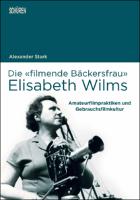
Die «filmende Bäckersfrau» Elisabeth Wilms
Amateurfilmpraktiken und Gebrauchsfilmkultur
 Download
Abstract
In the early 1940s, Elisabeth Wilms (1905-1981) from Dortmund discovered her passion for filming. What began as a hobby quickly developed into a lucrative business at the interface of amateur and commercial film after the end of the war: In gut Forty years she produced about one hundred films, including around sixty commissioned films for charitable organizations, industrial companies based in the Ruhr area and the city of Dortmund.
Their productions did not fill cinema halls, rather they were shown in the context of "non-theatrical film" outside of commercial cinema for a wide variety of purposes. Wilms acted simultaneously as a producer, director, camerawoman, editor and projectionist, but constantly declared her work in public as a "hobby" and was also often dubbed the "filming baker's wife" by the contemporary press.
With the focus on Wilms and her work, the case study follows an authorial approach and is situated at the same time in amateur and commercial film research. She significantly expands the understanding of film history by mapping the many facets of (West) German film culture after 1945 outside of commercial cinema, using the example of a female filmmaker. At the same time, it is to be understood as a contribution to Dortmund's local history. Anfang der 1940er-Jahre entdeckte die Dortmunderin Elisabeth Wilms (1905–1981) ihre Leidenschaft für das Filmen. Was als Hobby begann, entwickelte sich nach dem Ende des Krieges schnell zu einem einträglichen Geschäft an der Schnittstelle von Amateur- und Gebrauchsfilm: In gut vierzig Jahren produzierte sie etwa einhundert Filme, davon rund sechzig Auftragsfilme unter anderem für karitative Organisationen, im Ruhrgebiet ansässige Industrieunternehmen und die Stadt Dortmund.
Ihre Produktionen füllten keine Kinosäle, vielmehr kamen sie im Kontext des „non-theatrical film“ außerhalb des kommerziellen Kinos zu unterschiedlichsten Zwecken zur Aufführung. Wilms agierte zugleich als Produzentin, Regisseurin, Kamerafrau, Cutterin und Filmvorführerin, deklarierte ihre Tätigkeit in der Öffentlichkeit jedoch beständig als „Hobby“ und wurde von der zeitgenössischen Presse auch gerne als „filmende Bäckersfrau“ tituliert.
Mit dem Fokus auf Wilms und ihr Werk verfolgt die Fallstudie einen Autorenansatz und situiert sich gleichzeitig in der Amateur- und Gebrauchsfilmforschung. Sie erweitert dabei das Verständnis von Filmgeschichte maßgeblich, indem sie erstmals eine Kartierung der (west-) deutschen Filmkultur nach 1945 außerhalb des kommerziellen Kinos in vielen Facetten am Beispiel einer Filmemacherin vornimmt. Gleichzeitig ist sie als Beitrag zur Lokalgeschichte Dortmunds zu verstehen.
Keywords
Gebrauchsfilm;Dortmund;Autodidakt;Auftragsfilm;2. Weltkrieg;Dokumentarfilm;Werbefilm;Schmalfilm;Amateurfilm; Commercial film;self-taught;commissioned film;2. World War;documentary;commercial;small film;amateur filmDOI
10.23799/9783741001949ISBN
9783741001949, 9783741004216Publisher
Schüren VerlagPublication date and place
2023Series
Marburger Schriften zur Medienforschung, 92Classification
The Arts