
Logo Oapen
  • Join
    • Deposit
    • For Librarians
    • For Publishers
    • For Researchers
    • Funders
    • Resources
    • OAPEN
        View Item 
        •   OAPEN Home
        • View Item
        •   OAPEN Home
        • View Item
        JavaScript is disabled for your browser. Some features of this site may not work without it.

        Television with Stanley Cavell in Mind
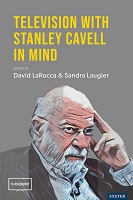
        Thumbnail
        Download PDF Viewer
        Contributor(s)
        LaRocca, David (editor)
        Laugier, Sandra (editor)
        Collection
        European Research Council (ERC); EU collection
        Language
        English
        Show full item record
        Abstract
        This collection of new work on the philosophical importance of television starts from a model for reading films proposed by Stanley Cavell, whereby film in its entirety—actors and production included—brings its own intelligence to its realization. In turn, this intelligence educates us as viewers, leading us to recognize and appreciate our individual cinephilic tastes, and to know ourselves and each other better. This reading is even more valid for TV series. Yet, in spite of the progress of film-philosophy, there has been a paucity of concurrent analysis of the ethical stakes, the modes of expressiveness, and the moral education involved in television series. Perhaps most conspicuously, there has been a lack of focus on the experience of the viewer. Cavell highlighted popular cinema's capacity to create a common culture for millions. This power has become dispersed across other bodies of work and practices, most notably TV series, which have largely appropriated the responsibility of widening the perspectives of their publics, a role once associated with the silver screen. Just as Cavell's reading of films involved moral perfectionism in its intent, this project is also perfectionist, extending a similar aesthetic and ethical method to readings of the small screen. Because TV series are works that are public and thus shared, and often global in reach, they fulfil an educational role—whether intended or not—and one that enables viewers to anchor and appreciate the value of their everyday experiences. Contributions from: William Rothman, Martin Shuster, Elisabeth Bronfen, Hugo Clémot, David LaRocca, Jeroen Gerrits, Stephen Mulhall, Michelle Devereaux, Thibaut de Saint-Maurice, Hent de Vries, Catherine Wheatley, Byron Davies, Sandra Laugier, Paul Standish, Robert Sinnerbrink.
        URI
        https://library.oapen.org/handle/20.500.12657/63190
        Keywords
        TV series and education; Philosophy of boxsets; Philosophy of TV; Cavell's writing on TV; Film-philosophy and TV; Stanley Cavell and TV; TV series and aesthetics; TV series and ethics; TV series and moral perfectionism; TV series and ordinary language philosophy
        DOI
        10.47788/BMYM9359
        ISBN
        9781804130209, 9781804130186, 9781804130193
        Publisher
        University of Exeter Press
        Publisher website
        https://www.exeterpress.co.uk/
        Publication date and place
        Exeter, 2023
        Grantor
        • H2020 European Research Council - 834759 Research grant informationFind all documents
        Series
        TV-Philosophy,
        Classification
        Television
        Film history, theory or criticism
        Ethics and moral philosophy
        Pages
        350
        Rights
        https://creativecommons.org/licenses/by-nc-nd/4.0/
        • Imported or submitted locally

        Browse

        All of OAPENSubjectsPublishersLanguagesCollections

        My Account

        LoginRegister

        Export

        Repository metadata
        Logo Oapen
        • For Librarians
        • For Publishers
        • For Researchers
        • Funders
        • Resources
        • OAPEN

        Newsletter

        • Subscribe to our newsletter
        • view our news archive

        Follow us on

        License

        • If not noted otherwise all contents are available under Attribution 4.0 International (CC BY 4.0)

        Credits

        • logo EU
        • This project received funding from the European Union's Horizon 2020 research and innovation programme under grant agreement No 683680, 810640, 871069 and 964352.

        OAPEN is based in the Netherlands, with its registered office in the National Library in The Hague.

        Director: Niels Stern

        Address:
        OAPEN Foundation
        Prins Willem-Alexanderhof 5
        2595 BE The Hague
        Postal address:
        OAPEN Foundation
        P.O. Box 90407
        2509 LK The Hague

        Websites:
        OAPEN Home: www.oapen.org
        OAPEN Library: library.oapen.org
        DOAB: www.doabooks.org


        Export search results

        The export option will allow you to export the current search results of the entered query to a file. Differen formats are available for download. To export the items, click on the button corresponding with the preferred download format.

        A logged-in user can export up to 15000 items. If you're not logged in, you can export no more than 500 items.

        To select a subset of the search results, click "Selective Export" button and make a selection of the items you want to export. The amount of items that can be exported at once is similarly restricted as the full export.

        After making a selection, click one of the export format buttons. The amount of items that will be exported is indicated in the bubble next to export format.