OAPEN Library: Recent submissions
Now showing items 5581-5600 of 49309
-
(1995)A framework for understanding the contributions of Vine Deloria Jr. and John Joseph Mathews, two American Indian Intellectuals, as part of the struggle for tribal sovereighty, and argues that the contemporary reality of ...
-
(2000)The Carlisle Indian School and the Haskell Institute in Kansas were among the many federally operated boarding schools enacting the U.S. government's education policy toward Native Americans from the late nineteenth to the ...
-
(2007)The Third Space of Sovereignty offers fresh insights on such topics as the crucial importance of the formal end of treaty-making in 1871, indigenous responses to the prospect of U.S. citizenship in the 1920s, native politics ...
-
(2005)Focusing on autobiographical writings and critical essays, as well as communally authored and political documents, The People and the Word explores how the Native tradition of nonfiction has both encompassed and dissected ...
-
(2009)Reconceptualizing aural and inscribed communication as a spectrum, The Networked Wilderness bridges the gap between the history of the book and Native American systems of communication. Cohen reveals that books, paths, ...
-
(1999)Scott Michaelsen shows cultural criticism to be at an impasse, trapped by tradition even in its attempts to get beyond tradition. With this dilemma in mind, he takes us back to anthropology's nineteenth-century roots to ...
-
(2005)Ed White explores the backcountry-city divide as well as the dynamics of indigenous peoples, bringing together two distinct bodies of scholarship: one stressing the political culture of the Revolutionary era, the other ...
-
(2008)In Taxidermic Signs, Pauline Wakeham decodes the practice of taxidermy as it was performed in North America from the late nineteenth century to the present, revealing its connection to ecological and racial discourses ...
-
(1999)A Creek National Literature attempts to find a critical vantage point grounded in Native culture from which to understand Native literatures. He argues that the application of postmodern literary criticism to Native ...
-
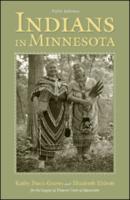
(2006)In Minnesota, the legacy of the American Indian people is reflected in many ways. Twenty-seven of the state's counties have names of Indian origin. The cities of Wabasha, Red Wing, and Shakopee are named for important ...
-
(1981)These narratives compare earthdivers in myths who brought dirt up from the watery earth to form land, with present-day earthdivers, mixed bloods, who dive into urban areas connecting dreams to the earth
-
(2001)American Pentimento traces the history of colonization and exploitation in the Americas coming to demonstrate how contemporary native struggles are decisively limited by embedded cultural assumptions this history has ...
-
(1990)Mary White Rowlandwon, a New England Congregationalist minister's wife, was held captive by the Algonquin Indians during King Philip's War in 1676. Several years after she was ransomed and living among the British again ...
-
(2023)In Defense of Sovereignty tells the story of the Oneida Nation's struggles for self-determination. Since the removal of the Oneida people from New York in the 1820s to what would become Wisconsin, the Nation has been engaged ...
-
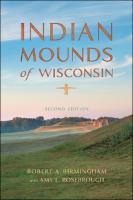
(2017)More mounds were built by ancient Native Americans in Wisconsin than in any other region of North America—between 15,000 and 20,000, at least 4,000 of which remain today. Most impressive are the effigy mounds, huge earthworks ...
-
(1995)This anthology highlights central values and traditions in Native American societies, exploring the ongoing struggles and survival power of Native American people today. The essays and stories by well-known writers provide ...
-
(1940)George T. Hunt's classic 1940 study of the Iroquois during the middle and late seventeenth century presents warfare as a result of depletion of natural resources in the Iroquois homeland and tribal efforts to assume the ...
-
(1999)"The White Man does not understand the Indian for the reason that he does not understand America. He is too far removed from its formative process. The roots of the tree of his life have not yet grasped rock and soil." The ...
-
(2009)Between A.D. 700 and 1100 Native Americans built more effigy mounds in Wisconsin than anywhere else in North America, with an estimated 1,300 mounds—including the world's largest known bird effigy—at the center of ...
-
(1995)The first comprehensive history of Native American tribes in Wisconsin, this thorough and thoroughly readable account follows Wisconsin's Indian communities—Ojibwa, Potawatomie, Menominee, Winnebago, Oneida, Stockbridge-Munsee, ...