
Logo Oapen
  • Join
    • Deposit
    • For Librarians
    • For Publishers
    • For Researchers
    • Funders
    • Resources
    • OAPEN
        View Item 
        •   OAPEN Home
        • View Item
        •   OAPEN Home
        • View Item
        JavaScript is disabled for your browser. Some features of this site may not work without it.

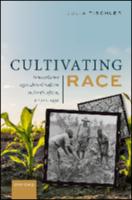
        Cultivating Race

        Transatlantic Agricultural Reform in South Africa, c. 1900–1950
        Thumbnail
        Download PDF Viewer
        Web Shop
        Author(s)
        Tischler, Julia
        Collection
        Swiss National Science Foundation (SNF)
        Language
        English
        Show full item record
        Abstract
        Cultivating Race examines the intersections and relationships between scientific knowledge in farming and race politics in early twentieth-century South Africa. Considering agricultural progressivism as both a Pan-Africanist and white supremacist movement from a transatlantic perspective, it discusses the ways in which the ‘agrarian question’ fed into the emergence of the global ‘colour line’. The book investigates rural transformations in a period of rapid industrial growth and agrarian commercialization through the lens of agricultural education—including agricultural colleges, extension services, children’s clubs, and domestic training. South Africa in the segregation period, as an extreme case of both rapid agrarian change and state racism, holds important insights into global questions of rural reform and race politics. The book addresses scholars and students of the history of knowledge and science, agrarian studies, environmental history, and South African history who seek to understand the intricate links between race, knowledge, and rural reform in the twentieth century.
        URI
        https://library.oapen.org/handle/20.500.12657/100519
        Keywords
         South Africa, US, agricultural reform, education, race, segregation, knowledge, gender, transnational history, progressivism
        DOI
        10.1093/9780198917311.001.0001
        ISBN
        9780198917281
        Publisher
        Oxford University Press
        Publisher website
        https://global.oup.com/
        Publication date and place
        Oxford, 2025
        Grantor
        • Schweizerischer Nationalfonds zur Förderung der Wissenschaftlichen Forschung
        Classification
        Agriculture and farming
        Ethnic groups and multicultural studies
        African history
        Pages
        334
        Rights
        https://creativecommons.org/licenses/by-nc-nd/4.0/
        • Imported or submitted locally

        Browse

        All of OAPENSubjectsPublishersLanguagesCollections

        My Account

        LoginRegister

        Export

        Repository metadata
        Logo Oapen
        • For Librarians
        • For Publishers
        • For Researchers
        • Funders
        • Resources
        • OAPEN

        Newsletter

        • Subscribe to our newsletter
        • view our news archive

        Follow us on

        License

        • If not noted otherwise all contents are available under Attribution 4.0 International (CC BY 4.0)

        Credits

        • logo EU
        • This project received funding from the European Union's Horizon 2020 research and innovation programme under grant agreement No 683680, 810640, 871069 and 964352.

        OAPEN is based in the Netherlands, with its registered office in the National Library in The Hague.

        Director: Niels Stern

        Address:
        OAPEN Foundation
        Prins Willem-Alexanderhof 5
        2595 BE The Hague
        Postal address:
        OAPEN Foundation
        P.O. Box 90407
        2509 LK The Hague

        Websites:
        OAPEN Home: www.oapen.org
        OAPEN Library: library.oapen.org
        DOAB: www.doabooks.org


        Export search results

        The export option will allow you to export the current search results of the entered query to a file. Differen formats are available for download. To export the items, click on the button corresponding with the preferred download format.

        A logged-in user can export up to 15000 items. If you're not logged in, you can export no more than 500 items.

        To select a subset of the search results, click "Selective Export" button and make a selection of the items you want to export. The amount of items that can be exported at once is similarly restricted as the full export.

        After making a selection, click one of the export format buttons. The amount of items that will be exported is indicated in the bubble next to export format.