
Jean Vanmai’s Chân Đăng The Tonkinese of Caledonia in the colonial era
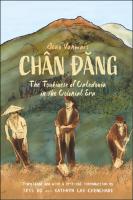
 Download
 Web Shop
Abstract
Jean Vanmai’s Chân Đăng The Tonkinese of Caledonia in the colonial era is a rare insider’s account of the life experiences of Chân Đăng, the Vietnamese indentured workers who were brought from Tonkin to work in the New Caledonian nickel mines in the 1930s and 1940s, when both Indochina and New Caledonia were French colonies. Narrated from the unique perspective of a descendant of Chân Đăng, the novel offers a deep understanding of how Vietnamese migration, shaped by French colonialism and the indenture system, led to the implantation of the Vietnamese community in New Caledonia, in spite of the massive repatriation of the workers and their families to Vietnam in the 1960s. Through his writing which blends his own family story with the rich oral testimonies of his compatriots, Jean Vanmai, a passionate advocate for the recognition of the part played by the Chân Đăng in the New Caledonian national history, has succeeded in giving these often faceless and powerless ‘coolies’ a strong collective voice. The translation into English of that voice was long overdue. Only accessible until now to French speakers, this English version opens up the exceptional account of the personal and emotional complexities of the Chân Đăng’s experience to a global readership. The English version not only advances knowledge of the history of indentured labour and colonialism in the Asia-Pacific, thus offering Anglophone historians and interested readers a new understanding of the processes through which histories and memories travel and translate across national, oceanic, and linguistic borders, it also constitutes an invaluable historical resource for Anglophone Vietnamese diasporic communities. One of the significant revisions in this English version is the restitution of the diacritical marks to all the Vietnamese names in the novel. Rather than a simple correction of the printing of Vietnamese diacritics which was unavailable at the time of publication of the origin text, it lends greater authenticity to the story for the Anglophone reader and symbolically restores their full identity to the Chân Đăng protagonists, who had become mere matriculation numbers under the colonial indenture system. The critical introduction by Tess Do and Kathryn Lay-Chenchabi is a richly documented text that contextualises the novel for the Anglophone reader. The photographs and official documents, carefully selected from a wealth of sources, including the National Archives of both New Caledonia and New Zealand, the private community collections and Jean Vanmai’s family photo albums, all contribute to an illuminating and informative visual overview of the Chân Đăng’s working and living conditions in New Caledonia. This emotive illustration of the past also functions as an important reference for the common future shared by all Caledonians, in that it conveys to the reader the long-lasting imprint left by the Vietnamese community on New Caledonia’s economic and cultural scene since the Chân Đăng first migrated to this country more than two centuries ago.
Keywords
Chan Dang; French colonialism; Labour migration; New Caledonia; Jean Vanmai; Chân Ðang Vietnamese DiasporaDOI
10.5130/aaiISBN
9780645371314, 9780645371307, 9780645371321, 9780645371338Publisher
UTS ePRESSPublisher website
https://utsepress.lib.uts.edu.au/Publication date and place
Broadway, 2022Imprint
UTS ePressClassification
French
History
Political science and theory
Literary studies: postcolonial literature
Sociology
Translation and interpretation