OAPEN Library: Recent submissions
Now showing items 16641-16660 of 49677
-
(2023)In the 15th century diocese of Aosta, churches and cemeteries were important gathering places: they were the centres where the believers’ liturgical and sacramental life was celebrated. They were also the places where ...
-
(2023)During the first XXth century, war, violence, forced migration, man-made famines, and epidemics were responsible of tens of million deaths. They left deep scars in the survivors, altered the equilibrium between genders and ...
-
(2023)The volume contains Andrea Trovesi’s linguistic writings, hitherto scattered in various journals and miscellanies, all characterized by a pragmatic approach. The first part collects studies on Slavic vocative conducted ...
-
(2023)The volume illustrates the reconstruction of the excavation mission conducted by the «G. Vitelli» Papyrological Institute in the winter between 1964 and 1965 on the site of Arsinoe, ancient capital of the Fayyum district. ...
-
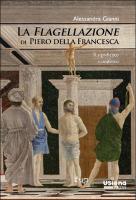
(2023)For over three centuries Piero della Francesca’s Flagellation has sparked great interest among scholars and academics all around the world who have built complex demonstration plans in order to reveal its true meaning, in ...
-
(2024)Between the seventies and eighties of the twentieth century Franco Fortini was called to teach the history of literary criticism at the university. Of this experience, capital in the definition of his intellectual parable, ...
-
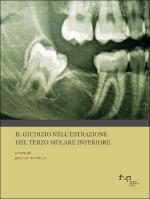
(2022)The scientific literature and clinical dental practice have in the extraction of the lower third molar an area of wide interest. In fact, parallel to the presence of prejudices and false beliefs on the part of patients, ...
-
(2023)The article presents a survey of the state of conservation of the vocative case and its morphological markers in standard Slavic languages. It gives an account of the simplifications that have occurred at the paradigmatic ...
-
(2023)In the Slavic languages, in which the vocative case is an unstable category (Polish, Serbian-Croatian, Macedonian, Bulgarian), the explicit vocative mark is better preserved with altered nouns, like diminutives and ...
-
(2023)The study tests the hypothesis according to which the Slavic anthroponyms in -e and -o underwent evolution from vocative endings to hypocoristic derivative suffixes and then to anthroponymic formants. According to the ...
-
(2023)The study tests the hypothesis according to which the Slavic anthroponyms in -e and -o underwent evolution from vocative endings to hypocoristic derivative suffixes and then to anthroponymic formants. According to the ...
-
(2023)In Czech the vocative case is still obligatory and the set of vocative endings is best preserved amongst Slavic languages. However, in spoken Czech the following irregularities in the usage of the vocative can be observed: ...
-
(2023)The Common Slavic *bogŭ ‘god’ displays an astonishingly rich derivation across Slavic languages, both numerically and semantically, with lexemes including almost all parts of speech: inflected (nouns, adjectives, verbs, ...
-
(2023)In those Slavic languages where the vocative inflectional case endings are used inconsistently, a statistically increased occurrence of vocative’s endings can be observed with nouns having a diminutive or hypocoristic ...
-
(2023)In two of the most ancient Old Church Slavonic manuscripts, the Codex Marianus and the Codex Zographensis (10th/11th cent.), the morphologically marked vocative shows a substantial continuity with the inflectional classes ...
-
(2023)The imperfetto epistemico-doxastico in Italian and the imperfekt na doseštane in Bulgarian refer to the modal usage of the imperfect tense in interrogative sentences when asking for a reminder about information previously ...
-
(2023)Besides its temporal semantics, the imperfect tense can express a wide range of modal meanings, which occur most typically in spoken varieties of language. The paper contrastively explores the modal uses of the imperfect ...
-
(2023)Amongst Slavic languages, only Bulgarian (and Macedonian) has retained the imperfect, a synthetic past tense inherited from Protoslavic. Apart from its temporal meanings, the Bulgarian imperfect occurs in a variety of modal ...
-
(2023)Artistic Reception of Images of Ukraine and Ukrainians in Mykola Gogol’s Taras Bulba (First Edition, 1835). This paper discusses Mykola Gogol’s story Taras Bulba (1835) and its exploration of Ukrainian history and culture. ...
-
(2023)On the First Reception of Ivan Turgenev’s Works (1869-1908) in Italy: Journals, Editions, Translators, and Cultural Mediators. This article presents the first analysis of the reception of Ivan Turgenev’s literary works in ...